
When was the last time you had a health check-up? For many people, the answer is “a while ago” or “only when I feel sick.” Yet, preventive healthcare is one of the strongest investments you can make in your well-being—and pathology plays a central role in making it possible.
Pathology is the medical specialty that studies the causes and effects of diseases, often through laboratory testing of blood, urine, tissue, and other samples. By uncovering hidden risks before they become serious, pathology provides doctors with the evidence they need to diagnose, treat, and prevent illnesses effectively.
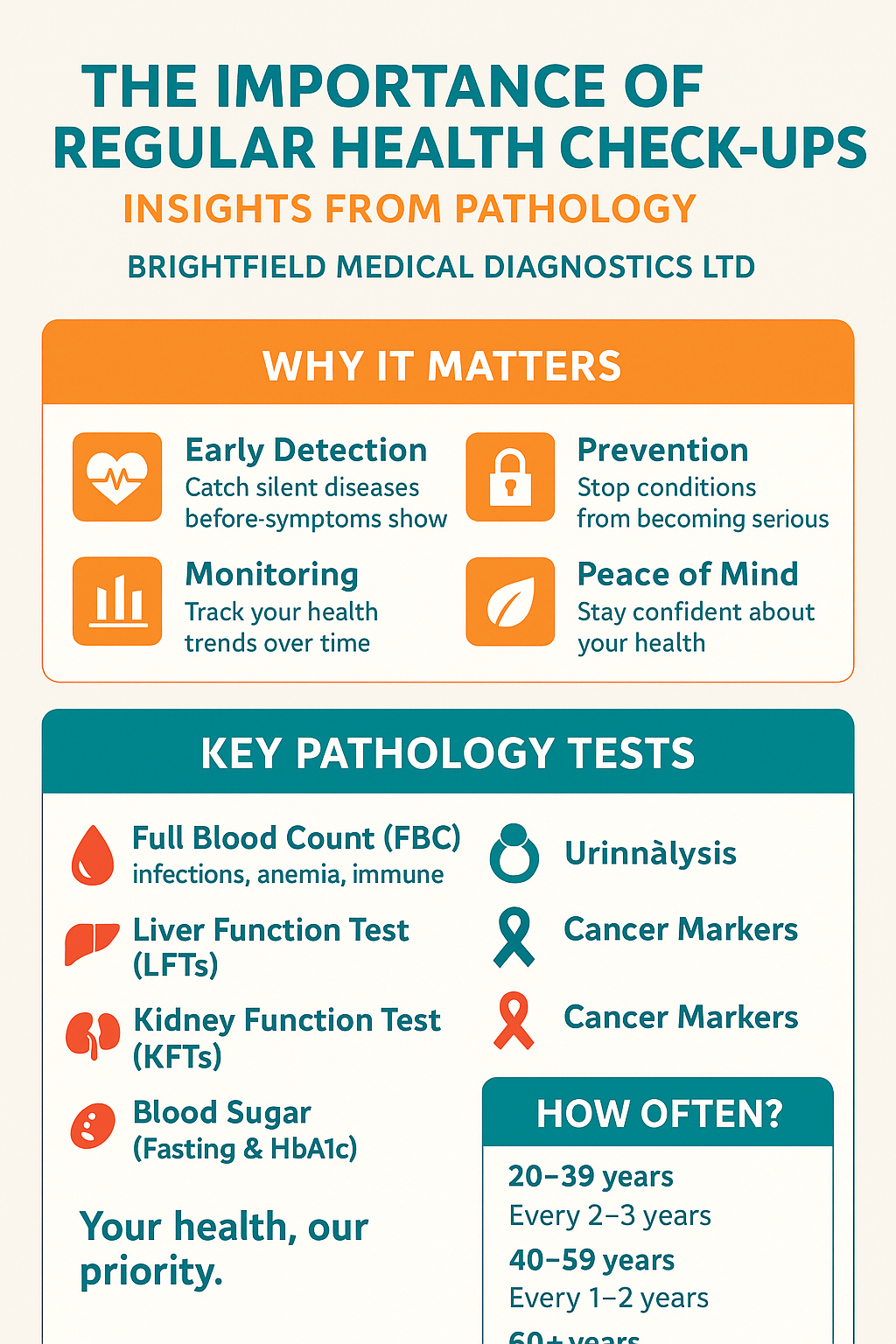
Why Regular Health Check-ups Matter
Early Detection of Silent Conditions
Many diseases—like diabetes, hypertension, kidney disease, and some cancers—can remain hidden for years without obvious symptoms. Routine pathology tests such as blood sugar, cholesterol, and full blood counts can reveal early warning signs before you notice anything unusual.
Preventing Complications
Detecting abnormalities early can prevent them from progressing into life-threatening complications. For example, catching high blood pressure or elevated blood sugar levels through regular tests allows for timely lifestyle adjustments or treatment.
Personalized Health Monitoring
Everyone’s health journey is unique. Regular check-ups allow doctors to track your specific health trends over time, spotting subtle changes that might indicate developing problems.
Peace of Mind
Regular health check-ups reduce anxiety by assuring you that things are under control—or by giving you the chance to act quickly if something is detected.
Key Pathology Tests in Routine Check-ups
A regular health check-up often includes:
Full Blood Count (FBC): Provides insight into general health, infections, anemia, and immune status.
Liver Function Tests (LFTs): Evaluates liver health and detects damage or disease early.
Kidney Function Tests (KFTs): Checks how well your kidneys filter and balance body fluids.
Blood Sugar (Fasting & HbA1c): Detects diabetes or pre-diabetic conditions.
Lipid Profile (Cholesterol & Triglycerides): Assesses risk of heart disease and stroke.
Urinalysis: Detects infections, kidney disease, or metabolic disorders.
Cancer Markers (when needed): Helps in the early detection of certain cancers.
How Often Should You Get Checked?
Ages 20–39: Every 2–3 years, unless you have risk factors (family history, obesity, high blood pressure, etc.).
Ages 40–59: Every 1–2 years, since risks of lifestyle-related diseases increase.
60 and above: Annually, or more frequently if advised by your doctor.
Specialized screenings (like mammograms, prostate-specific antigen tests, or colonoscopies) may be recommended depending on your age, gender, and risk profile.
The Role of Pathology Laboratories
Behind every accurate diagnosis lies the work of skilled pathologists and laboratory professionals. They ensure tests are carried out precisely, results are validated, and doctors get the evidence they need to guide treatment. At Brightfield Medical Diagnostics Ltd, we pride ourselves on delivering reliable test results with speed and accuracy—because your health decisions depend on it.
Takeaway
Regular health check-ups aren’t just for when you feel unwell—they’re an essential part of preventive care. With the help of pathology, hidden risks can be uncovered early, giving you the best chance for a long, healthy, and fulfilling life.
👉 Don’t wait until symptoms appear. Schedule your routine health check-up today—your future self will thank you.
